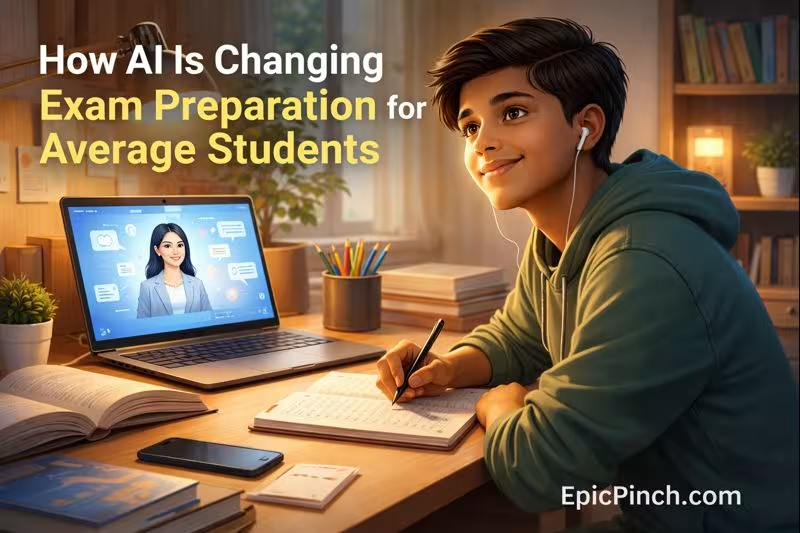
How AI Is Changing Exam Preparation for Average Students
For years, exam preparation has felt like an uphill battle for average students. Not everyone is a topper, not everyone understands concepts in one go, and not everyone has access to expensive coaching classes. Many students quietly struggle, feeling left behind while others race ahead. But today, something powerful is changing this story. Artificial Intelligence (AI) is slowly becoming a silent companion for average students—guiding, supporting, and lifting them up when confidence feels low.
This change is not loud or dramatic. It’s emotional, personal, and deeply human. AI is no longer just a technology; for many students, it feels like a patient friend who never judges, never scolds, and never gives up.
1. The Silent Struggle of Average Students
Average students often live with invisible pressure. They try hard, yet results don’t always reflect their effort. Teachers move fast, coaching centers focus on toppers, and parents expect improvement without fully understanding the struggle. Over time, self-doubt creeps in. Students begin to believe they are “not smart enough,” even when that isn’t true.
AI is changing this emotional landscape. For the first time, learning doesn’t feel rushed or embarrassing. Students can ask the same question multiple times without fear. They can learn at their own pace, in their own space. This alone brings relief—and that relief creates confidence, which is often more important than intelligence.
2. Personalized Learning: One Student, One Path
Traditional education follows a single path for everyone, but students are not the same. Some learn visually, some through repetition, and some by examples. AI understands this difference. It adapts.
AI-powered platforms analyze how a student learns, where they struggle, and what they already know. Based on this, they create a personalized study plan. Weak topics get more attention, while strong areas are revised quickly. This makes learning efficient and less overwhelming.
For an average student, this feels like finally being understood. No comparison, no competition—just progress. When learning starts to make sense, motivation naturally follows. AI turns confusion into clarity, step by step.
3. 24/7 Doubt Solving Without Fear
One of the biggest problems average students face is hesitation. They are often afraid to ask questions in class, fearing judgment or laughter. Doubts pile up, concepts remain unclear, and exams become terrifying.
AI removes this fear completely. Students can ask doubts anytime—late at night, early morning, or minutes before a test. There is no shame, no pressure. AI explains concepts again and again, using simpler language each time if needed.
This constant support builds trust. Slowly, students stop fearing doubts. They start learning actively, and that changes everything.
4. Smart Revision and Memory Boost
Revision is where many average students fail—not because they don’t study, but because they don’t know how to revise. AI solves this problem beautifully.
With smart revision techniques like spaced repetition, quick quizzes, and adaptive tests, AI helps students remember better. It reminds them what to revise and when. Instead of random studying, revision becomes structured and meaningful.
This approach reduces exam stress. Students walk into exams feeling prepared, not panicked. When memory works with confidence, performance naturally improves. AI doesn’t just help students study—it helps them retain.
5. Making Learning Less Lonely
Exam preparation can be emotionally isolating. Friends move ahead, comparisons hurt, and motivation drops. AI, surprisingly, reduces this loneliness.
Through encouraging feedback, progress tracking, and gentle reminders, AI keeps students engaged. Some tools even use conversational language, making learning feel like a dialogue rather than a lecture.
For many students, this emotional support matters deeply. When someone—or something—believes in you consistently, you start believing in yourself too. AI becomes that quiet supporter in the background.
6. Affordable Education for Every Student
Not every family can afford coaching classes or private tutors. AI bridges this gap. Many AI tools are free or low-cost, making quality education accessible to average students everywhere.
This democratization of learning is powerful. Talent is no longer limited by money. A student with dedication and access to AI can now compete confidently. Education feels fairer, and hope feels real.
7. The Human Side of AI in Education
AI doesn’t replace teachers, hard work, or discipline. What it replaces is fear, confusion, and helplessness. It supports human effort instead of overpowering it.
For average students, AI is not about becoming a topper overnight. It’s about understanding better, feeling confident, and improving gradually. That journey matters.
When technology meets empathy, learning becomes meaningful. And that is exactly what AI is doing—quietly changing lives, one student at a time.